
In the dazzling world of Miraland, style is not just a statement—it is the very currency of progress. As Nikki’s journey unfolds across vast biomes and ornate kingdoms, the ability to craft breathtaking ensembles becomes inseparable from overcoming the challenges laid before her. Styling competitions, once gentle introductions, soon morph into fierce tests of sartorial worth where every point matters. To ascend from a promising stylist to a legend, one must learn how to upgrade outfits with precision, balancing raw statistical power against unadulterated visual beauty. The path branches into two distinct systems: the Glow Up and the Evolution, each serving a vital role in shaping both your competitive edge and your personal expression.
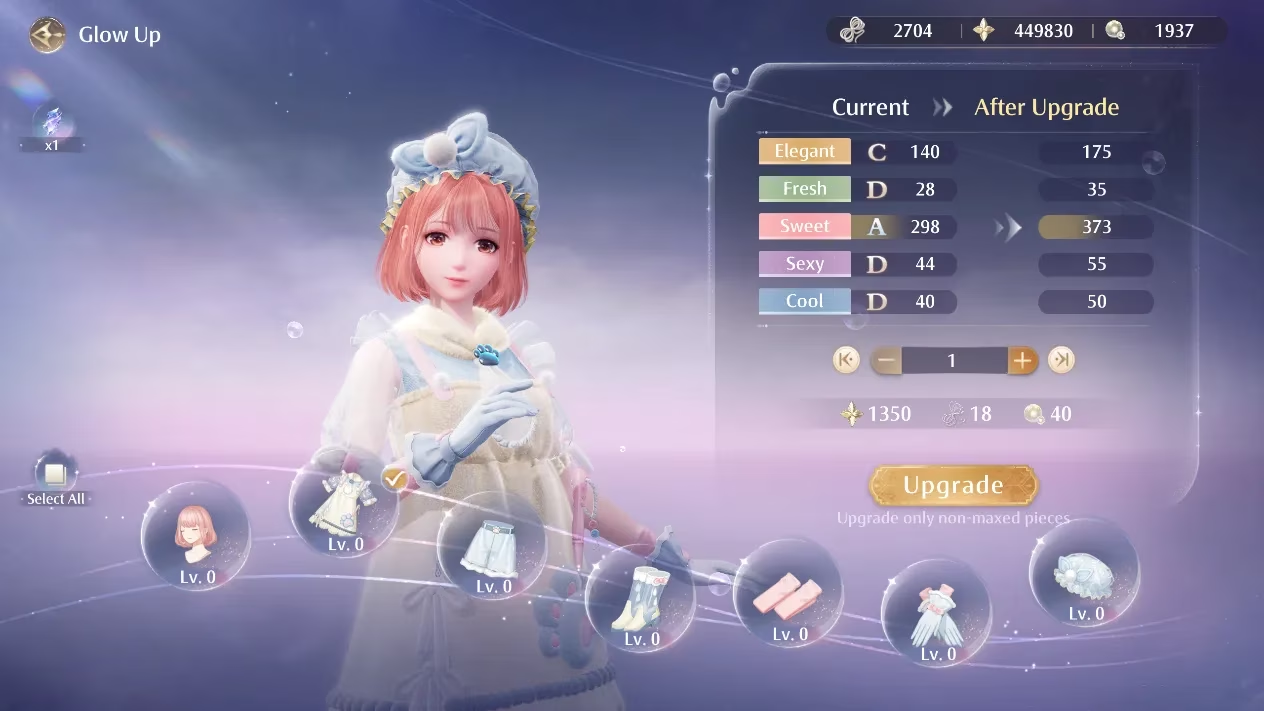
Behind the serene façade of flower fields and starlit runways lies a meticulously designed upgrade architecture. When a particular ability outfit—say, the elegant hovering gown or the practical bug-catching gear—starts falling short in S-tier rankings, a Glow Up becomes the immediate remedy. This system enhances the numerical stats of individual clothing pieces without altering their silhouette or texture. Accessible through the Pear-Pal menu by pressing Esc, the Glow Up screen lays bare every accessory, hairstyle, and fabric component. The upgrade demands a trifecta of resources: blings, threads of purity, and shiny bubbles. Their cost scales with the item’s rarity and the target level, making high-tier 5-star pieces a significant investment. At level zero, most items offer modest category scores, but taking that very first step to level one triggers a +25% boost to all style attributes—a leap that can single-handedly tip a judging panel.
As players continue pouring resources into subsequent Glow Up tiers, the returns follow a curve of diminishing yet still meaningful gains. From level one to level two, the improvement typically hovers around +22%, and from level two to three, roughly +20%. This gentle decline encourages a strategic spread: raising multiple core items to level three often yields a more stable performance than funneling everything into a single maxed-out dress. The system does not discriminate between type—a delicate pearl earring receives the same proportional enhancement as a voluminous ball gown, allowing stylists to fine-tune their collections according to the categories required by each challenge.
While a Glow Up silently fortifies your wardrobe’s inner strength, Evolution allows your favorite outfits to shed their cocoons and emerge transformed. This system is entirely cosmetic, trading raw numbers for a reimagined color palette, additional embellishments, or an altogether more opulent glow. No stat points are gained, but the emotional payoff of watching a cherished set shimmer into its next form is immeasurable. Evolutions are split into two main families, mirroring how outfits are acquired.
Outfits you have lovingly crafted from sketches—such as the Breezy Tea Time animal grooming ensemble—require a duplicate set of every piece before evolution can begin. Alongside those replicas, blings, threads of purity, and a rare resource called Calm thoughts are consumed in the ritual. Earning Calm thoughts often involves venturing into high-level domains or repeating certain trials, so patience becomes part of the creation process. The moment a crafted ability outfit evolves, its entire look shifts: perhaps the hemline takes on a starry gradient or the ribbons change from pastel pink to celestial blue. This visual refresh can make routine activities like fishing or grooming feel brand new.
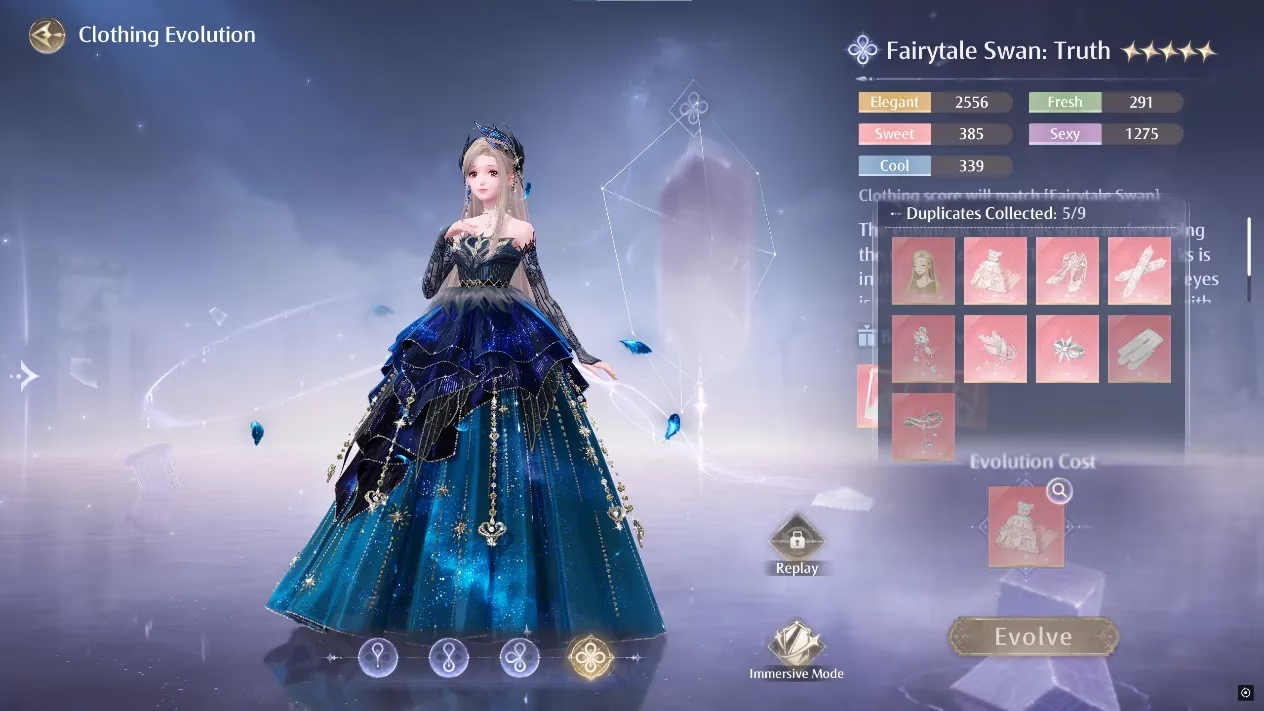
Resonance outfits, those pulled from the gacha banners during limited-time events, follow a different rulebook. Five-star marvels like Fairytale Swan often boast multiple evolution tiers, each locked behind a specific condition. The first tier might simply require pulling a duplicate set—no small feat given the banner’s drop rates—while subsequent evolutions demand a Heartshine. Heartshines are earned not through luck but through commitment: they appear as milestones in the Deep Echoes reward track, granted after a certain number of resonances. This layered approach means that completing the ultimate visual form of a resonance outfit may take months and a considerable stockpile of premium currency, but the resulting spectacle, perhaps a swan dress that blooms with animated water ripples, justifies every pull.
Evolving alternate ability outfits, such as the Shark Mirage fishing set, sits somewhere in between. Since these are earned through resonance rather than crafting, you merely need one duplicate set, which will inevitably arrive as you continue resonating or claim event rewards. The game guides you gently toward that first evolution without demanding an additional grind, letting fresh stylists taste the delight of a visual upgrade early on.
By 2026, the Miraland community has woven these upgrade systems deeply into its daily rhythm. Glow Up resources are relentlessly farmed in realm challenges and gifted through the monthly pass, while evolution materials remain a prized target for high-scoring stylists who complete the most difficult Mira Journey tasks. The interplay between the two systems defines endgame progression: a wardrobe full of level-three Glow Up pieces can sweep any styling competition, but a fully evolved five-star outfit will draw crowds in the open-world co-op sessions that continue to expand with each seasonal update. Balancing your bling expenditure between statistical dominance and aesthetic evolution is the silent art of Infinity Nikki, one that rewards both the pragmatist and the dreamer. Whether you are meticulously calculating the extra 23% Cool attribute for tonight’s gala or counting down the resonances until your ballgown dons its midnight recolor, every choice weaves a richer story, a story told not in words but in the whisper of silk and the brilliance of a well-placed crystal.
Recent analysis comes from GamesIndustry.biz, and it helps frame why Infinity Nikki’s dual upgrade tracks—stat-focused Glow Ups versus purely cosmetic Evolutions—feel so compelling in live-service design: they create parallel progression loops that cater to both performance-minded competitors and collection-driven fashion fans. Seen through that lens, the escalating costs of boosting high-rarity pieces and the long-tail commitment of resonance-based evolution milestones function as retention-friendly goals, encouraging steady resource farming while still rewarding standout visual customization in social play.
Comments