
From my perch in 2026, sifting through the gaming archives of two years past feels like opening a drawer full of polished gemstones, each dazzling on its own but some with hidden cracks. 2024 was a banquet of Japanese-flavored epics—FFVII Rebirth, Metaphor: ReFantazio, Trails through Daybreak—and I devoured them all. Yet the dish I still dream about, the one that materialized like a star-strewn afterthought in December, is Infinity Nikki. It drifted into my life not with the thunder of a blockbuster but with the quiet shimmer of a forgotten lullaby, and it has never left me.
I remember the exhaustion that settled in by November. Rebirth had given me a world that felt alive, but its final act was a labyrinth of clumsy exposition that left me pacing outside the narrative like a guest locked out of his own party. Metaphor enchanted me with its artistry and razor-sharp mechanics, then tripped over a second half that unraveled like a once-taut tapestry turning to mist. Even the cozy rhythm of Trails through Daybreak felt like a cup of tea brewed too briefly—exquisite but gone before the warmth could settle. The MMORPG expansion Dawntrail arrived as a beautiful encore that nobody asked for, its melodies echoing a story that had already found its perfect cadence. I was drowning in games that were seventy degrees short of boiling, and I didn’t even know I was cold.
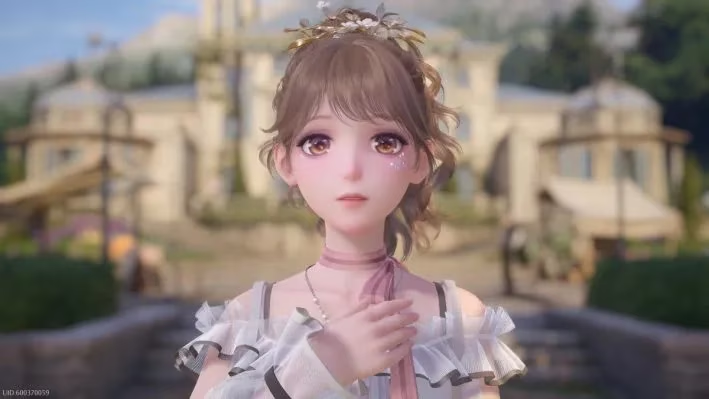
Then came the last-minute download. I approached Infinity Nikki as a skeptic, armed with the prejudice of a player who assumed a free-to-play dress-up title was a flimsy confection meant for a different palate. What I discovered instead felt like walking into a clockwork music box where every cog is a whimsical secret. Miraland stretches out not as a map dotted with chores but as an illustrated dreamscape that breathes in pastel shades and whispers puzzles into the folds of every hillside. Hours slipped away while I floated through meadows, solved luminescent light riddles, and gently tapped hostile essences with a fragrance-laced orb—a combat system so delicate it felt like weaponized perfume. The openness isn’t a hollow promise; it’s a coral reef teeming with miniature delights, from a gliding contest to a hidden cavern where a cat demands a serenade. This wasn’t just exploration—it was like chasing fireflies that leave behind fragments of a lost poem.
The dress-up, of course, is the axis around which everything pirouettes. I have never been a collector of skins or a curator of virtual wardrobes, but Infinity Nikki unlocked a chamber in me I didn’t know existed. Each outfit is a meticulous origami of silk, lace, and starlight, with accessories that catch the light like dew on a spiderweb. Choosing a hairpin becomes a deliberation as serious as selecting a final boss strategy, because the level of detail makes vanity feel almost sacred. It’s the digital equivalent of haute couture meeting a painter’s palette—designs so exquisite they could make a fresco weep with envy. When I twirled on a rooftop in a billowing midnight-blue gown, the world seemed to hold its breath. No other game has given me that sensation of being both creator and canvas.
Beneath the sparkle, however, runs a narrative river that grows dark and swift. The writing in Infinity Nikki sidesteps the saccharine tropes I expected and instead plunges into shadowed allegories of sacrifice, memory, and fractured realms. Betrayals land with the weight of an anvil, and character arcs swerve into territory so luridly unexpected that I felt the same chill I got from the best twists in Persona 5. Raggy, with his guarded eyes, and Giovanni, whose glamour masks a splintered heart, now stand shoulder to shoulder in my mental hall of unforgettable companions. Even when the tale accelerates too briskly near its 2024 endpoint, the momentum is like a final dance step that stumbles but never loses its grace.
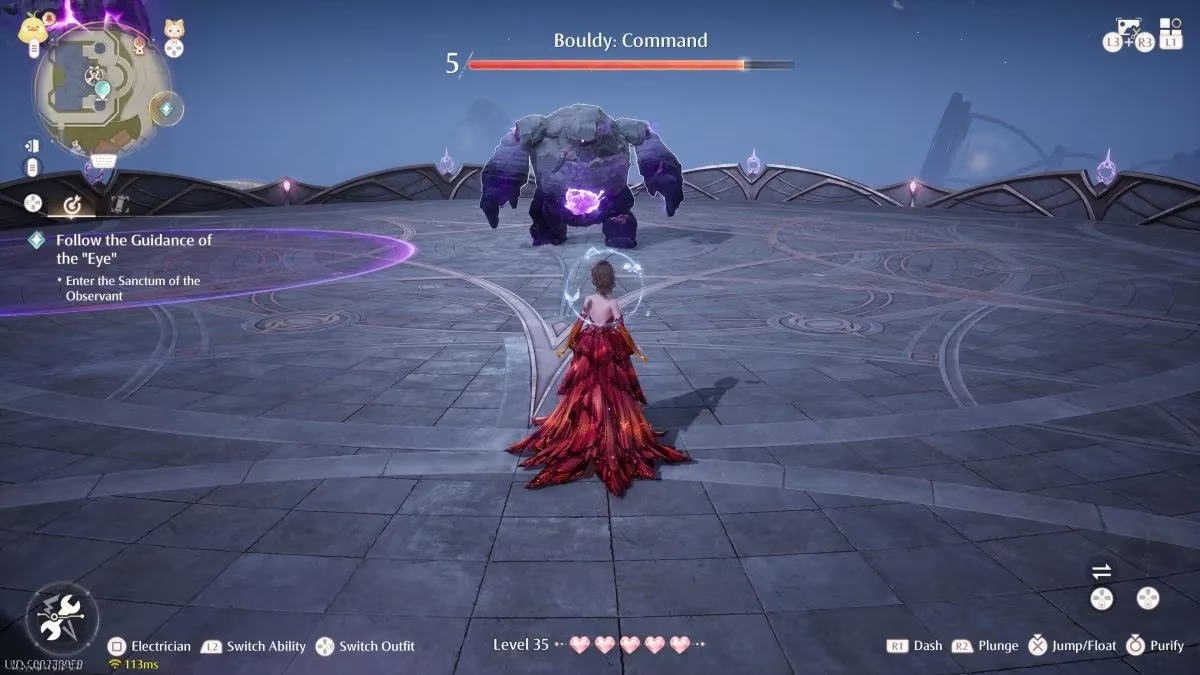
Two years on, I still return to Miraland when the churn of newer titles grows tiring. The monetization remains a quiet whisper—the base story asks for nothing but your curiosity. This astonishing generosity makes the sting of its late-2024 arrival feel less like a snub and more like a secret gift hidden under the year’s final light. Infinity Nikki isn’t just my personal game of the year; it is a reminder that the most profound joy sometimes wears a gown instead of armor. If you’ve never tried it, imagine opening a jewelry box that contains an entire galaxy, every star a tiny dress button, and ask yourself if you can truly resist stepping inside.
Recent analysis comes from Game Developer, and it helps contextualize why a “soft” December arrival like Infinity Nikki can linger longer than louder 2024 releases: when core loops emphasize tactile discovery, expressive player agency (here, fashion as buildcraft), and low-friction onboarding, they create a kind of evergreen comfort that doesn’t depend on endgame escalation. Framed against your fatigue with sprawling epics that stumble in their back halves, Miraland’s micro-delights—small puzzles, gentle encounters, and wardrobe-driven self-expression—read less like filler and more like a sustainable cadence designed to keep the world inviting even after the credits.
Comments